Thoughts & Notes

The Toxic Nature of Degrowth

A field of nine thousand grey dots with a magnifying lens picking out the single black one
To scale. Every dot is as much energy as all of civilisation uses at any given moment. The sunlight landing on Earth in that same moment is nine thousand of them. We use the black one.

Degrowth rests on a single line: you cannot have endless growth on a finite planet. Everything else in the creed — the sermon of enough, the suspicion of anything new — leans on it. And the line is wrong: wrong about energy, wrong about matter, and wrong about what growth even is.

Start with energy. The planet is not a sealed box; it sits in a torrent of the stuff. The Sun delivers to Earth in about an hour what our entire civilisation uses in a year. Every furnace, engine, data centre and kettle on the planet, running at once, adds up to roughly one part in nine thousand of the sunlight landing on us — and Earth itself catches less than half a billionth of what the Sun throws out.

Then matter, which is never used up, only rearranged. Waste is matter in an inconvenient arrangement, pollution is matter in the wrong place, and what puts either right is energy and know-how. Every mess we have made came from doing things crudely, with too little of both. Not one of them is cleaned up by having less.

Aluminium is the most abundant metal in the Earth's crust, and it was once dearer than gold. Then, in 1886, two people worked out within weeks of each other how to free it with electricity, and now we wrap sandwiches in it. Sand was only sand before it was microchips and glass fibre. Air was only air until we learned to pull the nitrogen out of it and turn it into bread, a trick that now feeds about half of humanity. The planet consisted of the same materials the entire time; all that changed was what we knew.

Growth, properly understood, is complexity, matter arranged more cleverly than it was before. Its only ceiling is the laws of physics, and we are nowhere near them. To preach less is not respect for limits. It is a declaration that today, of all days, is as clever as we are ever allowed to get.

Complexity is a virtue. Every new craft, instrument, theory and machine is one more thing the universe can do that it could not do before, and a world with more of them in it is a better world: more to learn, more to master, more ways to be good at something. Growth is how we get there. This backwards ideology of degrowth asks for the opposite. It would have us stifle our naturally creative and expansive souls, and lessen ourselves until we are content with playing in the mud.

Alignment and the Illusion of Representation

D'Angelo teaches Bodie and Wallace chess in The Wire
The king stay the king.D'Angelo Barksdale, The Wire

No man can truly represent another. A mind can only be known from the inside. What a person wants changes from day to day, most of it never gets said out loud, and some of it they have not worked out for themselves. To claim to carry that on someone else's behalf is presumptuous. To claim to carry it for millions at once is a con.

Yet the con is how the modern world is run. Everything a person knows about their own life, and everything they want from it, is squeezed into a single mark, made once every few years, picking between a handful of strangers: barely two bits of information. From that whisper of signal the winner claims to speak for everyone, on everything, until the next mark is due.

It would be an insult even if it worked. And it doesn't work.

A lever is aligned with the hand that holds it and with no other, and the hand on the levers of power is not yours. It never was. In the UK your vote moves nothing. It only chooses whose turn it is to fill their pockets and see their name in lights. And it turns the rest of us into supporters, loyal to a side the way people are loyal to a team, excusing whatever our own side does and condemning whatever the other one says. For those involved it is a pursuit of wealth, ego and a higher place at the table within their club, and nothing more. For you it seals your own servitude for another half decade.

Against the Fade

Faded

Entropy is death. Not the bloody, sudden, dramatic kind, but the gradual fading — the slow withering of everything into nothing. Entropy leads to the end state, the heat death of the universe: every particle drifted so far from every other that nothing can touch, react or interact ever again. Just a cold, even quiet that stretches on forever.

Complexity is the opposite, and it is the meaning of life. It is what humans can foster while we're alive — fresh entanglements and new horizons are there to be realised and pursued from a fresh platform each day, from the intricacies of mathematics and sciences to the techniques and tactics of arts and sports.

Every new discovery, every new kind of brush stroke, each freshly conjured explosive movement or musical riff, every new skill and strategy practised and honed is a small knot tied in defence against entropic unravelling. Entropy needs no help; it is always pulling.

Complexity is good, and is ours to be fostered. Entropy is the enemy.

A Waste of Time

Tony Soprano doesn't trust cookies
That cookie shit makes me nervous.Tony Soprano, The Sopranos

The cookie banner is the most successful piece of bureaucratic vandalism ever concocted. It does not kill anyone — it simply skims. A few seconds at a time, site after site, it lifts slivers of attention, cutting piece by piece at our limited collective consciousness.

The slivers have been measured. In a 2024 study run with France's data protection authority, 3,947 people took an average of 4.1 seconds to get past a plain cookie banner. By 2019, more than 60% of popular websites in Europe were throwing one in front of every new visitor.

294M people online daily × 4.1 s per banner × banners a day
1 a day
1,600
2 a day
3,200
3 a dayOur estimate
4,700
4 a day
6,300
5 a day
7,900
At three a day, a light morning's browsing: about a million hours every day, 366 million a year, the equivalent of 176,000 full-time jobs, and a whole career gone roughly every two hours. Counts only people aged 16 to 74. Sources: Eurostat population (334M aged 16–74) and daily internet use (88%); 4.1 seconds per banner; a career is Eurostat's average 37.2-year working life at 40 hours a week.

The output of all that labour is a single answer, the same one, given over and over, telling nobody anything they didn't already know. And it doesn't even work. When researchers examined 680 consent pop-ups from the five biggest vendors across the UK's top 10,000 websites, only 11.8% met the minimum requirements of the law they exist to satisfy. Hide the reject button one screen deeper and consent jumps by 22 to 23 percentage points. It is not privacy. It is theatre, with a ticket price paid in seconds.

Nobody chose this. The law was well-intentioned, the committee meant well and every website is merely complying, which is precisely what makes it so insidious: a cost spread so thinly across so many people that no one ever feels it, and so no one is ever especially driven to remove it. In November 2025, more than seven years after GDPR came into force, the Commission finally proposed letting the browser answer the question once, for everyone. Until that becomes law, the clicking goes on.

Whole careers thrown away, and for what? Not even a plate of gabagool.

Room to Move

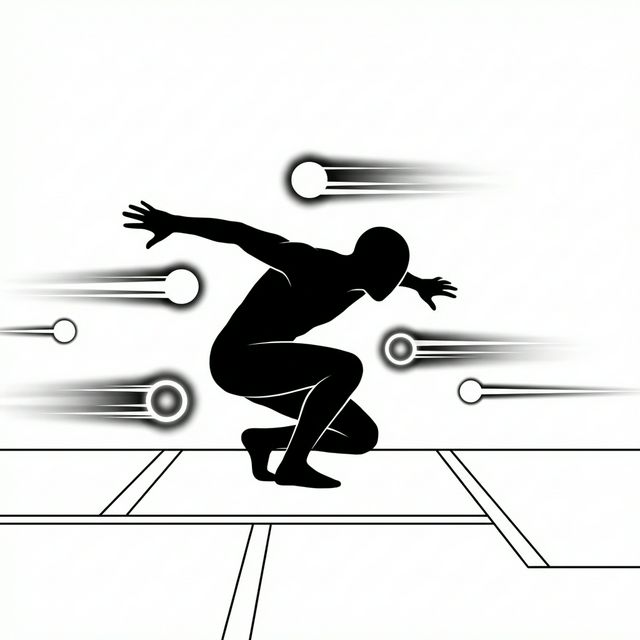
Room-scale VR illustration

Room-scale VR has fundamentally transformed what physical exertion can look like. In the violent dance of a Blaston duel, players often find a more intense and engaging workout than anything traditional cardio equipment could ever hope to offer. Bodies dodge, duck, dip, dive and dodge through physical space, entirely oblivious to the calories burning because the immediate priority is surviving the projectiles hurtling like a wrench toward one's face.

Within a century, immersive, room-scale gaming will almost certainly dominate global fitness. Future generations will look back at stationary treadmills as medieval torture devices, baffled as to why the joy of play was ever divorced from the necessity of keeping fit.

In its purest form, room-scale VR offers the liberty to transcend physical surroundings. It grants a new kind of agency over what one experiences, untethered from the constraints of geographic, political and economic circumstance. Here, distance collapses and earned skill becomes the only differentiator, as strangers thousands of miles apart compete and cooperate in a first-person lived experience that can't be matched by any other medium.

Web Toys

Satisfying software illustration

Flame Thrower begins with the scratch of a match. Lit into a fireball and thrown across the screen — each bounce sends it spinning, coiled flames spill violently across the inky black, they twist and writhe, desperately reaching around the edges of the screen as embers drift down through the dark. The motion and vibrations from the audio entwine together, and the whole thing settles into something rich and warm, something that feels good to have in the hands for a little while.

Fairy Fountain is a Zelda's Navi-at-home type affair — a glowing orb gliding across water, the yin to Flame Thrower's yang, each touch ringing out a peaceful musical note, directing the motion, leaving elegant ripples of water and a drop of serenity in its wake.

Neither has a score, a timer, or a win condition. They are just things that are pleasant to interact with for a brief moment. That is the entire point. Sometimes the goal is just to touch something that feels satisfying to the senses. These were forged and refined because the sensations — the weight of a moving object, the sound it makes, the speed and fashion in which it responds — seem worth continuously tuning for the sake of it.

The Quiet Revolution of Heat Pumps

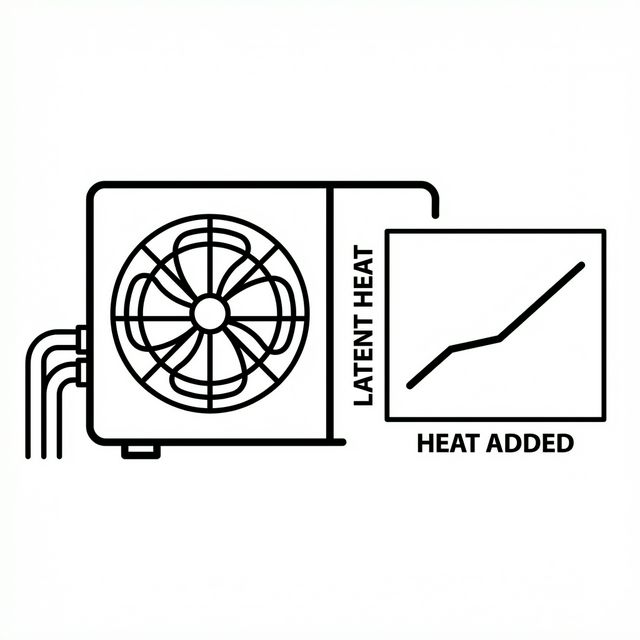
Heat pump latent heat chart clip art

A heat pump does not generate heat — it moves it. By extracting warmth from the outdoor air (even at temperatures well below freezing) and concentrating it indoors, a modern heat pump delivers two to four units of heat for every one unit of electricity it consumes. That ratio is simply impossible for any resistance heater or gas boiler to match.

The technology is mature, well understood, and already ubiquitous in the form of refrigerators and air conditioners. The barrier has never been engineering; it has been perception. Technology Connections has a definitive series of videos that walk through exactly how heat pumps work, why the economics make sense, and what is holding adoption back.

Heat pump gang.